Category: Technology Dissemination

  • Collaboration between Puslitkoka and Bank Indonesia for Technical Guidance on Certification and Sorting of Cocoa Beans for Export at the Merta Abadi Summit, Bali, Indonesia

    Collaboration between Puslitkoka and Bank Indonesia for Technical Guidance on Certification and Sorting of Cocoa Beans for Export at the Merta Abadi Summit, Bali, Indonesia

    Collaboration between Puslitkoka and Bank Indonesia for Technical Guidance on Certification and Sorting of Cocoa Beans for Export at the Merta Abadi Summit, Bali, Indonesia

    The potential for chocolate industrialization in the Bali area has the potential to penetrate the international market, as evidenced by the selection of Bali as the world’s 50 best cocoa beans at the Cocoa of Excellence 2017 in Paris. Several small and medium industries in Bali are currently also growing significantly. This will also have an impact on the economy for the surrounding community. Currently, there are quite a lot of local communities who cultivate cocoa to downstream cocoa, but the process can still be optimized.

    Puslitkoka and Bank Indonesia cooperate in implementing Technical Guidance entitled Certification and Sorting of Cocoa Beans for Export. Puslitkoka was represented by postharvest researchers, namely Hendy Firmanto, ST., MSc. and M. Burhanuddin Fauzi, STP The Bank Indonesia party was represented by Leo Ediwijaya, as the Head of the KEKDA Implementation Team and staff. This activity will be held on June 2-4, 2021, at the Merta Abadi Summit in Jembrana Bali, chaired by Kadek Suantara. This program is expected to increase the capacity and capability of farmer groups to penetrate the global market.

  • Puslitkoka, FIT Canada, and Lestari synergize to organize a Coffee Field Gathering with the theme “Climate Smart and Gender Friendly Coffee Planting System”

    Coffee development in South Sulawesi, especially Tana Toraja, Enrekang, and North Toraja is currently being carried out to increase the sustainability of national coffee production. The collaboration between Puslitkoka, Lestari, and FIT Canada resulted in a Coffee Field Gathering entitled “Climate Smart and Gender Friendly Coffee Planting System” on February 9, 2022. This Field Meeting was held in order to disseminate coffee technology innovations to coffee business actors. This activity was attended by Haris Paridi as Assistant for Development Economics representing the Regent of Tana Toraja, Darmawan as Director of the Pangkajene Islands State Politani, Kabid. Plantation Office of Agriculture Tana Toraja Regency, Fitria Yuliasmara, Diany Faila S. H., Novie Pranata E. as Researcher of Puslitkoka, Rahman Dako and Riniaty Liku Bulawan from Persippi, Ophier Sumule as Academician of Hasanuddin University, Coordinator of BPP Gandangbatu Sillanan,
    The Climate Change Adaptation and Environment (KAPABEL) Consortium Team,
    Agricultural Extension Officer of UPT BPSDMP South Sulawesi province, Chairman of the KOPINTA Farmers Cooperative, Chairman of KUB Sarong Samaturu and 50 coffee farmers in the area. The hope of this activity is to strengthen networks among local coffee stakeholders so that they can strengthen the image of Indonesian coffee, especially Toraja.

    kopi #temulapang #nusantara #Toraja

  • The East Kalimantan Provincial Plantation Service together with Puslitko held a Cocoa Postharvest Technical Guidance activity in Danau Redan District, East Kutai Regency, East Kalimantan Province.

    The East Kalimantan Provincial Plantation Service together with Puslitkoka held a Cocoa Postharvest Technical Guidance activity in Danau Redan District, East Kutai Regency, East Kalimantan Province on 2-3 February 2022. The activity was attended by 15 participants from cocoa farmers. The aim of the training is to provide material and practice in postharvest processing and determining the physical quality of cocoa.

    Technical Guidance from Puslitkoka was delivered by Hendy Firmanto, S.T., M.Sc. The materials presented included: upstream and downstream processing, physical quality test practicum and practice of making chocolate drinks. In addition, participants also received material related to Cocoa Cultivation by other presenters. It is hoped that this activity can be useful for cocoa farmers, especially in Danau Redan District, East Kutai Regency, East Kalimantan Province so that they can improve the quality of cocoa beans and their processed products.

  • COFFEE ROASTING : The Gateway to Coffee Processed Products

    Written by : Rizky Wiradinata

    source : Tim Media Sosial Puslitkoka

    Roasting is a combination of temperature and time to change the structure and chemical properties with heat treatment which aims to form a distinctive aroma and taste in brewed coffee. In the roasting process there is a reduction in the water content accompanied by the evaporation of volatile compounds contained in the coffee beans, so that when the roasting process takes place, the aroma of roasted coffee will smell. The determinants of the success of the coffee roasting process include time, temperature, machine and roaster operator.

    Source : Bayu Setyo A

    In general, the degree of roasting of coffee beans is divided into light (light), (medium) (dark). But as time goes by, the term is also known light to medium (between light and medium), medium to dark (between middle and dark) and Burn (through the dark so that the oil comes out of the surface of the roasted coffee beansi).

    Roasting is the first step in downstream coffee processing, almost all processed coffee products are made from roasted coffee. Roasted coffee also has a selling value, but it should be noted that roasted coffee is susceptible to loss of aroma due to evaporation of volatile compounds during and after the roasting process. Various kinds of processed coffee products that originate from roasted coffee are ground coffee, instant coffee, ready-to-drink coffee and mixed coffee. Ground Coffee What is sold in the community is roasted coffee that has experienced a size reduction grinding. Soluble coffeemade from roasted coffee that has been extracted, then dried using the method freeze dried or spray dried. Ready-to-drink coffee is a drink made from roasted coffee concentrate made using the method Integrated Extraction Systemand the final product is packaged in plastic bottles, PET packaging or cans. Mixed coffee is a drink made from steeping coffee mixed with various ingredients, including milk, cream, chocolate and so on. There are many kinds of mixed coffee products around the world, including capucino, mochacino, latte, herbal coffee, long black (americano), red eye, irish coffee, and so on.

  • Press Release Holistic Coffee Expo 2021

    Pusat Penelitian Kopi dan Kakao Indonesia (Puslitkoka), in collaboration with the Pemerintah Kabupaten Jember, Bank Indonesia Kantor Perwakilan Jember, and the International Coffee Organization (ICO), is organizing the Holistic Coffee Expo (HCE) 2021. HCE is an annual event that was first held in 2020. HCE Event
    the year 2020 was successfully attended by 16 resource persons, attended by more than 2000 participants, and supported by various stakeholders such as; government, NGOs, industry, academics, farmers, traders, coffee entrepreneurs, both cafes, and MSMEs. The success of HCE 2020 has attracted public attention to coffee, especially in the Sekarkijang area (ex Besuki and Lumajang Residencies) through various events such as webinars, live auctions, coffee talks, and virtual business matching. HCE 2021 is the second year’s event with the theme “Proud of Nusantara Coffee” which aims to cultivate people’s love for Nusantara coffee and efforts to increase national coffee consumption. In addition, HCE also provides support to the Jember district government to support Jember as the “Best Robusta Coffee Center in Indonesia”. The HCE 2021 will be held in a Hybrid (Online and Offline) manner during December covering three aspects of coffee’s point of view, namely business, culture and health. The 2021 HCE series will be opened by the Regent of Jember, Bank Indonesia Jember Representative Office, Director of PT. Nusantara Plantation Research, Head of the Indonesian Coffee and Cocoa Research Center and Executive Director of the International Coffee Organization (ICO) on December 1, 2021 online. A series of HCE 2021 event’s include:

    1. Focus Group Discussion (FGD) “Increasing National Coffee Consumption” – December 1, 2021.
    2. Coffee Talkshow for Health which aims to provide education to the public about the benefits of coffee. – December 1st 2021.
    3. Focus Group Discussion (FGD) with the theme and “Sustainable Coffee Production” – December 7th 2021.
    4. “Wes Wayahe Ngopi Bareng” with Jember Regent. Wes Wayahe Ngopi bareng event was carried out to socialize the coffee drinking movement which was attended by
      the entire Jember community. – Desember 9th 2021.
    5. Business Matching – Desember 14th 2021
    6. Preliminary “HCE Manual Brewing V60 Competition” – Desember 6th
    7. Final Manual Coffee Brewing V60 – Desember 9th 2021.
    8. Fun Cupping & Live Auction which will be conducted online through the coffeehub.id platform. This activity is expected to be a trigger to improve the economy of MSMEs and increase people’s coffee consumption. – Desember 15th 2021.
    9. The highlight of the 2021 HCE event will be held virtually on December 16, 2021 through the Nusantara Coffee Bereng Coffee activity which will be attended by several coffee farmers.
      from various arabica and robusta coffee production centers, such as Aceh, North Sumatra, West Sumatra, Jambi, West Java, East Java, South Sulawesi, Bali, East Nusa Tenggara, and Papua. With the implementation of “Ngopi with Kopi Nusantara” it is hoped that it will represent the diversity of Indonesian coffee and the culture in each of them
      area. Through the 2021 HCE event, it is hoped that it can introduce a variety of Indonesian coffees and educate the public regarding coffee, so that it can increase coffee consumption and the national economy.
    10. Information about Holistic Coffee Expo 2021 can be accessed through the following pages:
      www.iccri.net/hce-2021
      www.coffeehub.id
      Humas Holistic Coffee Expo 2021
      Indonesian Coffee and Cocoa Research Institute
  • KOMASTI COFFEE, the New Primadona of Arabica Coffee Planting materials

    KOMASTI COFFEE, the New Primadona of Arabica Coffee Planting materials

    by: Ari Wibowo

    Coffee has become a lifestyle trend for young people today to just hang out with colleagues or have casual conversations with colleagues. The level of coffee consumption in Indonesia also increased by around 7.7% per year in the period 2015 – 2019. Currently, Indonesia still ranks fourth as a coffee producer with a proportion of 6.10% of the total world coffee production under Brazil, Vietnam, and Colombia (USDA, 2021)[1]. Seeing the opportunity for the coffee market which is still large, it is necessary to increase coffee production.

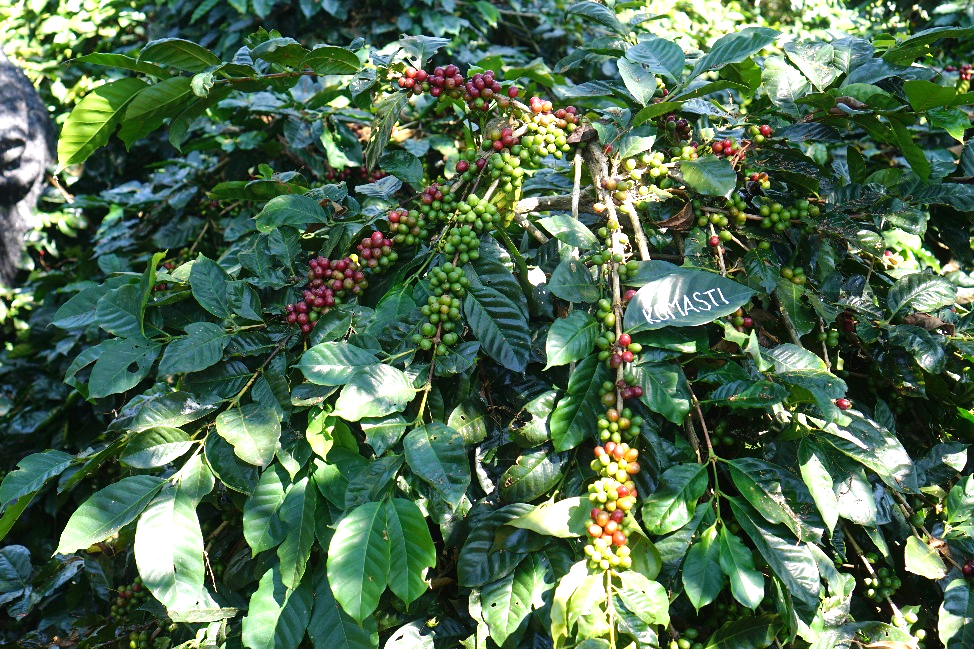
    Arabica coffee has a high economic value and dominates the world coffee market so that export opportunities are still very open. Superior planting material is an important factor in increasing coffee production. Komasti is a new superior variety of Arabica coffee which was released by the Indonesian Coffee and Cocoa Research Center in 2013. This variety has a potential yield of ±2.1 tons of green beans per hectare with a population of 2,000 plants, of course with intensive care.

    Pak Badi, an Arabica coffee farmer on the slopes of Mount Wilis – East Java, said that the Komasti variety has large and fast fruiting fruit. This member of the Sumber Makmur 2 farmer group said that in the second year, Komasti coffee had learned to bear fruit and in the third year, the fruit harvest had reached ± 1 ton of logs per 2,000 plants. Coffee fruit production will increase as the plant ages. This farmer group obtained Komasti seeds from the assistance of the Agriculture Service of Tulungagung, East Java. Another coffee farmer in Sumberbening Village, Trenggalek Regency, East Java also expressed the same thing. Komasti Arabica coffee has the advantage of fast fruiting, large and dense fruit and excellent taste, even Komasti coffee from Sumberbening village was named the 1st place winner for the best tasting coffee in Trenggalek Regency with the name “Kopi Sengungklung” in the 2020 GEBYAR KOPI event. High productivity (±1.8 tons of seeds/ha) and resistance to leaf rust disease are the most important factors that become a reference for farmers to choose Komasti coffee as a superior variety planted.

    Currently, Komasti coffee has begun to spread in several parts of Indonesia, even in North Sumatra there have been several demonstration plots of Komasti coffee planted by farmer groups in the area. The presence of the Komasti coffee variety brings fresh air to Indonesian Arabica coffee farmers. Upaya untuk meningkatkan hasil kopi tentu bukan menjadi perkara yang sulit lagi. In addition, the central and regional governments continue to support the national coffee plantation and production expansion program. Puslitkoka is always present in supporting the increase in Indonesian coffee production by issuing superior planting materials. Lets use certified superior varieties to increase farmers income.

    Photo: Documentation of Dr. Retno Hulupi


    [1] United Stated Department of Agriculture (USDA), 2021

  • Trial of the UPH Primary Coffee Package with the Sintaro Farmers Group

    Testing activities for primary coffee processing equipment and machines in Sindang Dataran, Rejang Lebong, Bengkulu with the Sintaro Farmers Group, Sintaro Perkasa Mandiri Production Cooperative and the PT Team. Api Mitra Palma – MEDCO Group. The machine tool package being tested is a machine tool package for wet process coffee processing. This trial activity will be held on 24-28 August 2021.

    The trial was carried out using 5 tons of coffee cherries as raw materials. Congratulations on this trial process, the Equipment and Machine Technology Team of the Puslitkoka applies the standard SOP in order to produce the best quality coffee.

    The process method is a wet process, where the coffee cherries are mined, the ripe coffee cherries are processed by a pulper machine, while the floating coffee cherries are processed by a dry process. Furthermore, after the pulping process, the next is the fermentation process for 12 hours, in this case the fermented coffee is Robusta coffee. The next process is washing with a washer machine then drying for 2 days and followed by a drying process with a dryer for 10 hours until the water content is safe for coffee storage, which is 12%.

  • Coffee Bean Drying Techniques as a Potential Factor for Coffee Taste Differentiation

    Drying of coffee beans has the main purpose as a process to remove the water content in the coffee beans so that the coffee beans will avoid potential quality degradation in the final processing, namely storage in the warehouse. The decrease in quality or damage (deteoration) in question is initiated by the presence of high water in the seeds, for example causing mold or triggering the presence of warehouse pests. Some species of fungi can also produce certain chemical compounds that are toxic to humans, such as the emergence of ochratoxin compounds caused by fungal attacks Aspergillus ocracheus. Fungal attack besides being able to cause toxicity in coffee can also reduce the potential for the flavor to be produced, so that aspects of drying techniques are important to consider.

    The drying technique in practice can be done through drying in direct sunlight (direct sun drying), indirect drying (indirect sun drying) and mechanical drying (mechanical drying) use machine. Direct drying can use a drying floor or with tarpaulin mats, indirect drying is done using a drying table (para-para) with a cover or with a drying house which is generally equipped with ventilation. Drying using a machine is generally carried out with a convection heating system with a heating source coming from a heating furnace and blowing hot air using a fan or blower into the seed drying room. A good drying temperature according to SNI standards is carried out at a temperature of no more than 55oC for arabica coffee beans and not more than 80oC for robusta coffee beans.

    In the processing method wet process-wet hulling or type Sumatran Process done by drying coffee beans without horns (green bean) ywhich is still wet with a moisture content range of 25-30% and low seed thickness so that the heat transfer rate in the seed drying process is more evenly distributed and water evaporation directly from the seeds so that there is no saturation which causes the seeds to require higher heat (excess) to evaporate the water. Sufficient and not excessive heat energy during drying will prevent unnecessary evaporation of volatile aroma-forming compounds (volatile), so that the potential for coffee aroma will be better and have a stronger flavor potential potensi (bold).

  • The Role of Puslitkoka in Postharvest Technical Guidance for Coffee in West Java to Target the Coffee Export Market

    Puslitkoka was present in the implementation of post-coffee technical guidance which was held on 17-19 June 2021 at the Pangrango Sukabumi Resort. Puslitkoka is represented by postharvest researcher, M. Burhanuddin Fauzi.

    The post-harvest technical guidance was carried out by the Director General of Processing and Marketing of Plantation Products attended by the Head of the Plantation Service of West Java and Central Java Provinces, several Heads of the Agriculture Service or those related to coffee commodities in the West Java Regency, as well as several farmer groups from various regions in Java. West.

    In the technical guidance, postharvest technology, analysis of coffee bean quality according to SNI, analysis of farming, and profitability of downstream coffee product development were presented.

  • Plagiotropic Clonal Cocoa (PCC) as a Choice of Superior Clonal Cocoa Planting Materials

    The propagation of cocoa can be distinguished into generative and vegetative multiplication. Generative propagation generally uses seeds derived from seeds. Vegetative propagation or also commonly referred to as klonal propagation can be achieved through several ways, among others, connecting shoots, grafts, and cuttings. The propagation of clonal cocoa that is widely developed in today’s society is clonal with the connection of shoots. Clonal multiplication will provide a uniform crop, more stable production, and better disease resistance when compared to generative multiplication due to its similar nature to its parent. It is also the reason why the propagation of clonal is favored by planters.

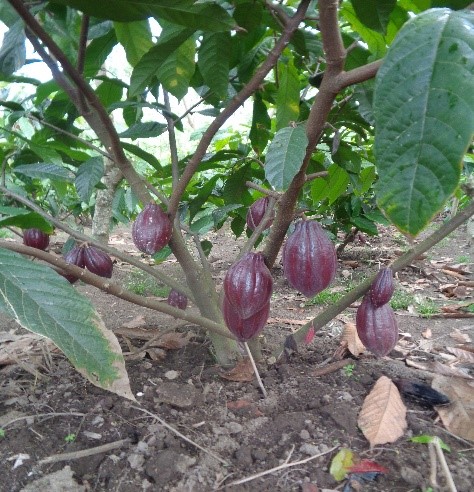
    Cocoa branch that is dimorphism means it has two forms of vegetative shoots, orthotrop and plagiotrop branches. Orthotrop branches that have upward growth and plagiotrop branches that have relative to side growth. This will provide the choice of planters to develop cocoa with the advantages of each of the two branches of cocoa. Currently, plagiotrop branches are widely used by cocoa planters to connect shoots as top stems due to the abundant availability of materials in the garden. Plagiotrop branch or also can be called fan branch or fruit branch studied by some researchers has precocity or formation of fruit faster. The age of the plant 2 years can already produce fruit to be harvested so as to give an idea that the plagiotrop branch can be used for planters who want to harvest their cocoa garden quickly.

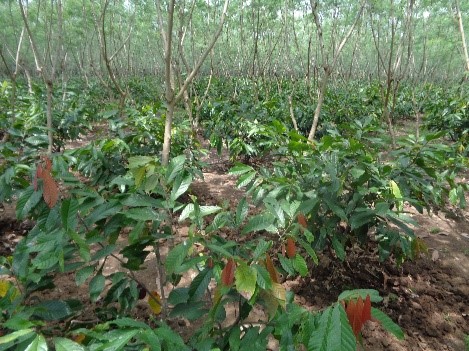
    The latest technology developed by Puslitkoka, namely PCC (Plagiotropic Clonal Cocoa) or Klonal Cocoa Plagiotrop. This clonal cocoa is derived from vegetative propagation that has the advantage of all the organs of clonal plants (roots, stems, leaves), do not use the stem down, quickly flowering and fruiting, habitus short plants, no false buds, can be mass produced, and its easy distribution. Through this multiplication, superior cocoa clones such as MCC 02, ICCRI 09, Sulawesi 01, and Sulawesi 02 can be mass-produced and can reach to a wider area. With the product of cocoa technology plagiotropic is expected to be an alternative planter in planting superior planting materials and increase national cocoa production through garden clonalization.